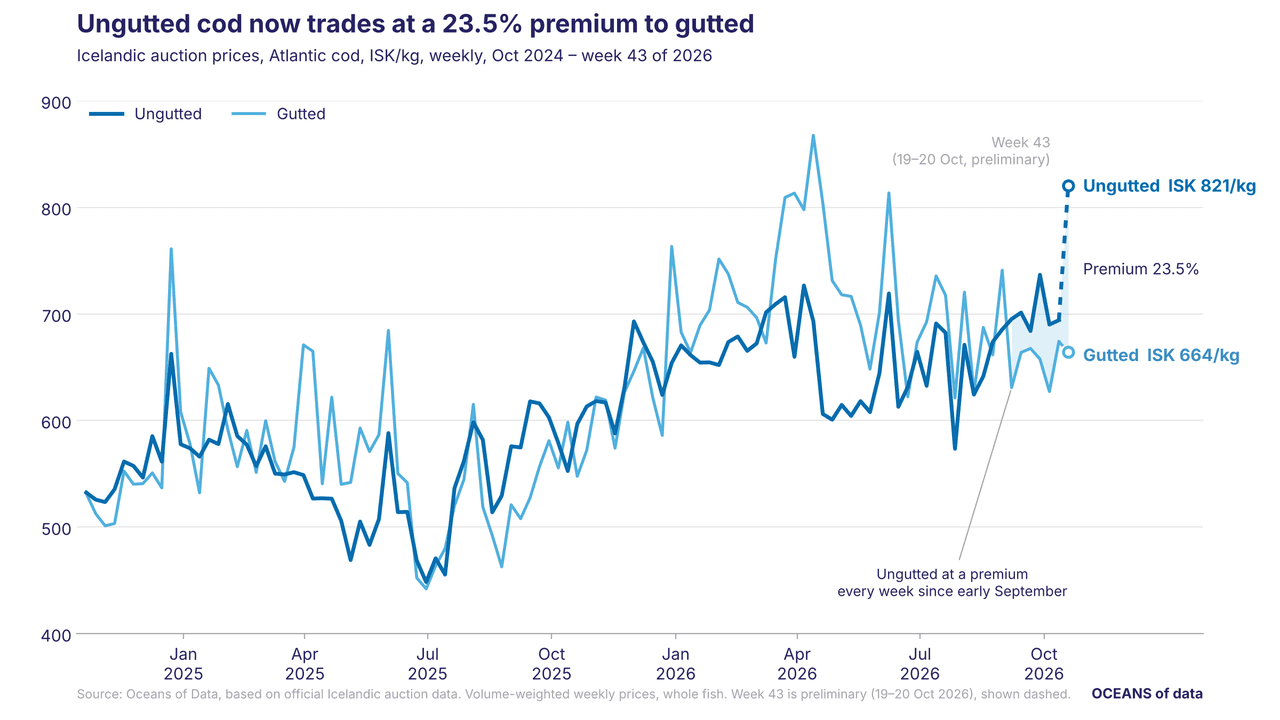
Ungutted Cod Hits Two-Year Price High Following Drop in Landings
Overall cod landings barely changed, but the price gap between ungutted and gutted cod widened sharply.

Our weekly read on the seafood market, written from the same verified data our customers use to price and trade.
Overall cod landings barely changed, but the price gap between ungutted and gutted cod widened sharply.
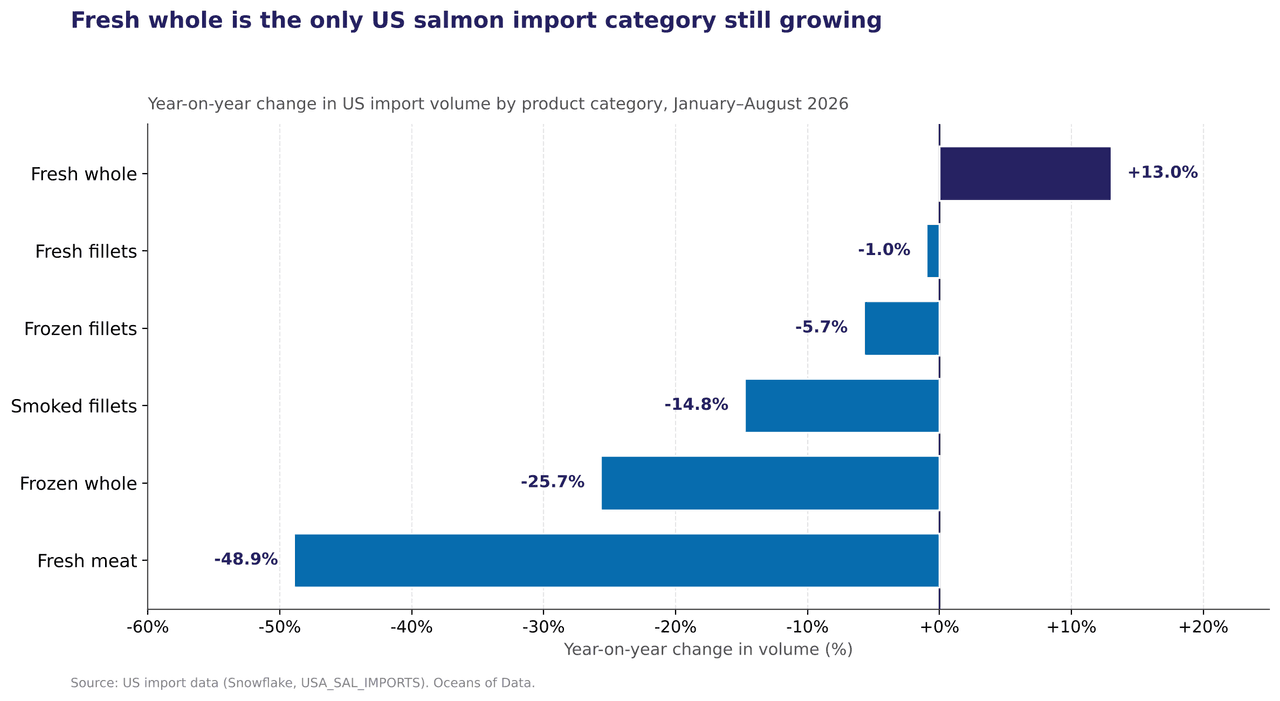
Norwegian fresh whole salmon exports to the United States have held above August levels into the autumn.
They're looking at the wrong chart.
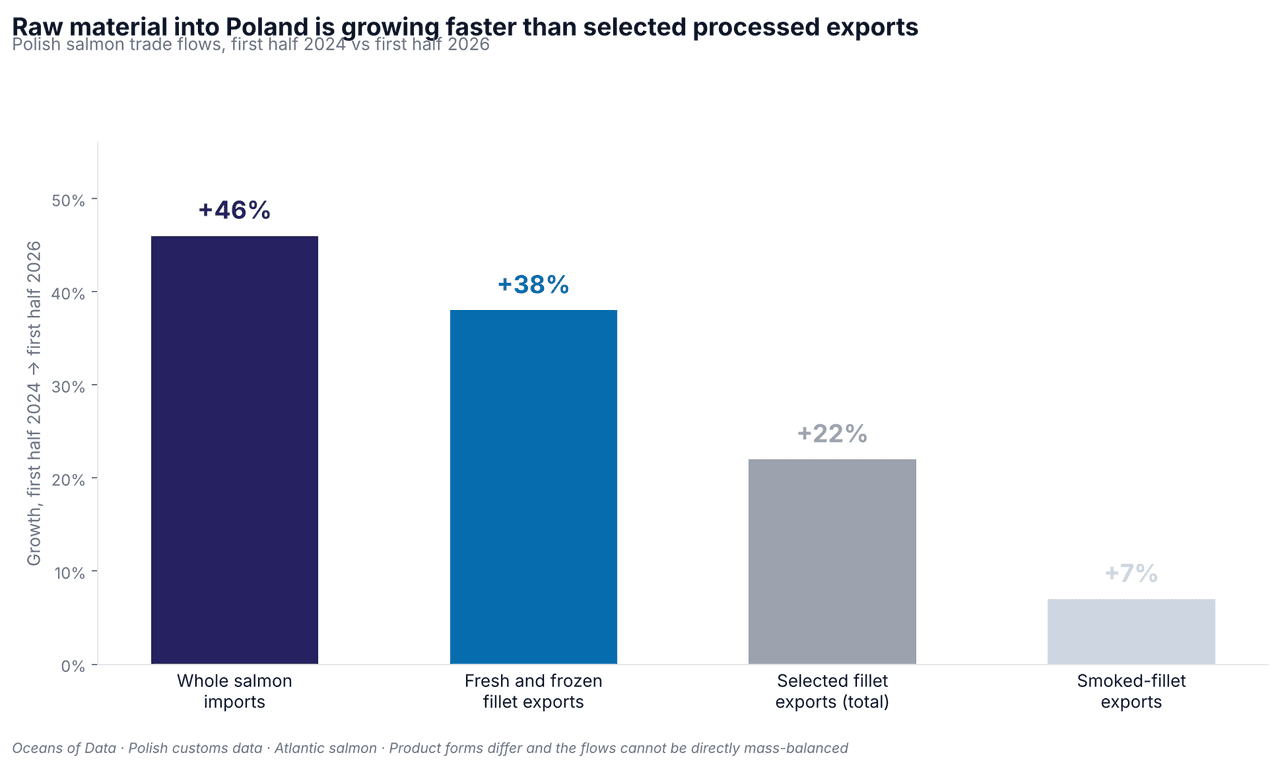
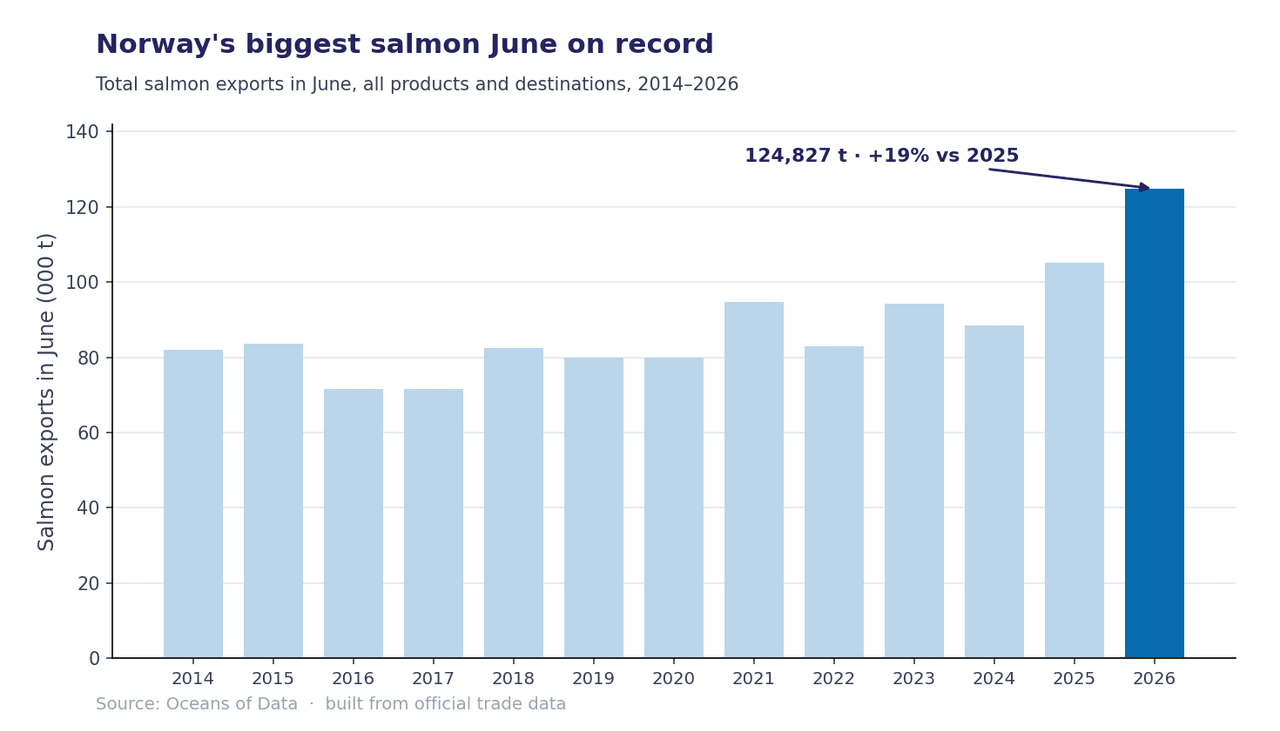
Norway is exporting record salmon volumes, and much of the current market discussion is focused on where the additional fish is being absorbed. China is one obvious growth story. But Poland — Norway's largest salmon destination — raises a different question: what happens after the fish crosses the first border?
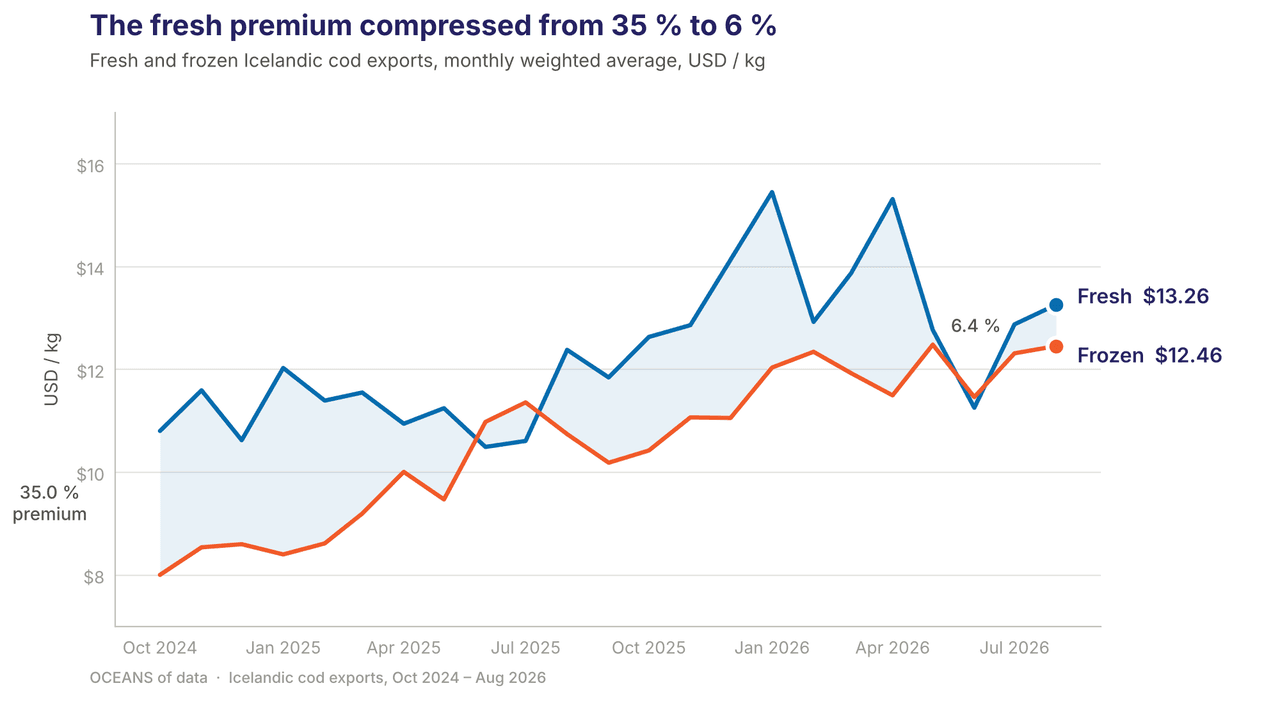
The gap between fresh and frozen Icelandic cod export values has narrowed sharply in less than two years.
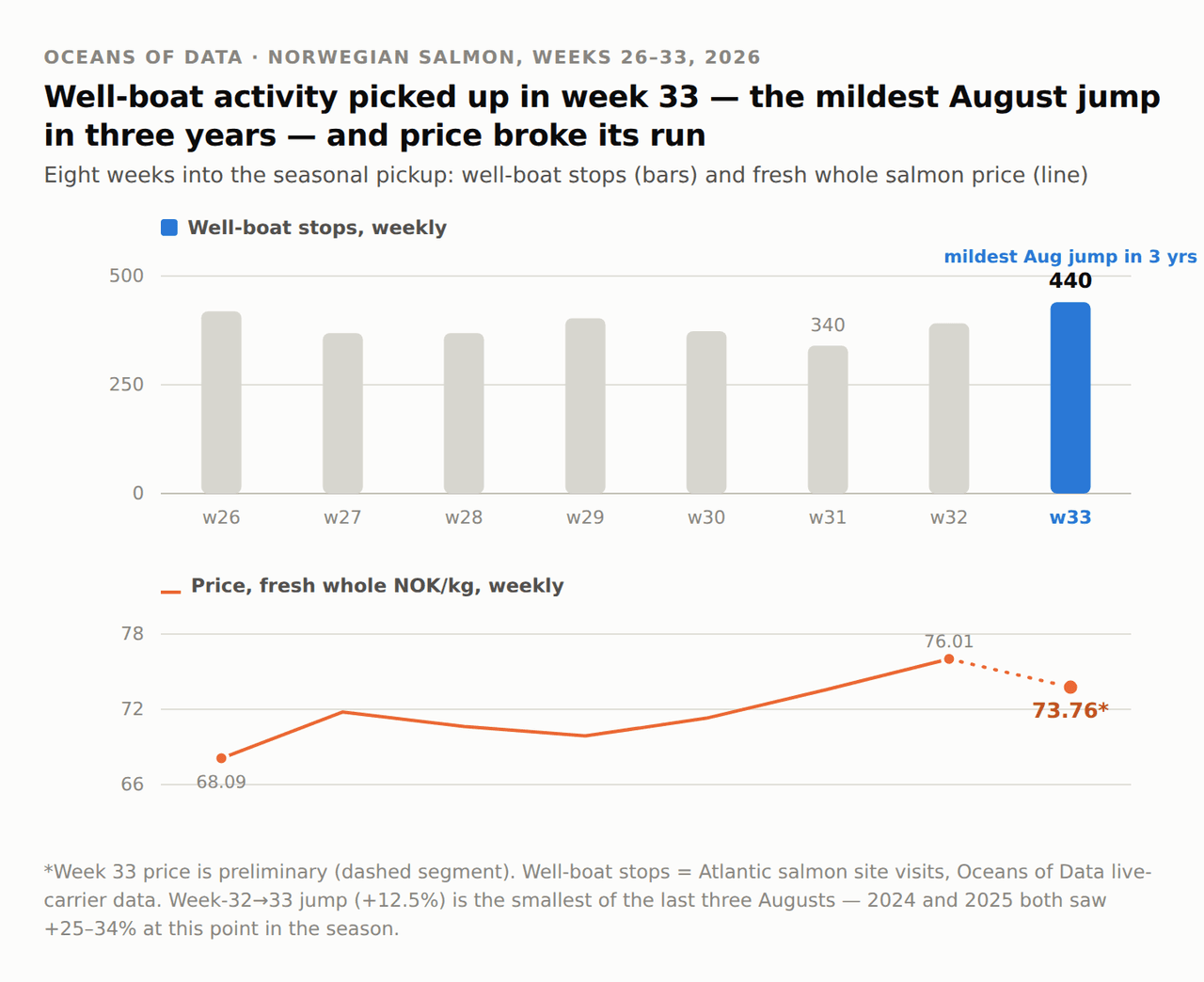
The seasonal August harvest pickup arrived, but at half the size of the last two years, and fresh whole salmon price broke a three-week run of gains.
Real-time vessel tracking shows Norway's weekly harvest topping out in late June, and the price, for once, climbing straight through it.
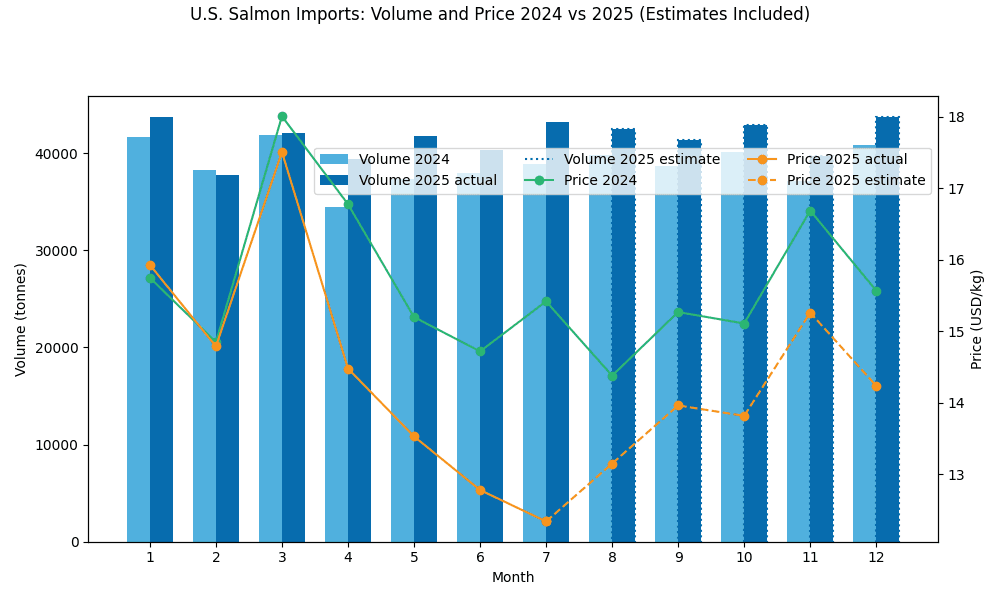
U.S. salmon imports rose ~18,000 tonnes in the first seven months of 2025, yet the average price per kilo fell 8.5%, squeezing exporter margins.
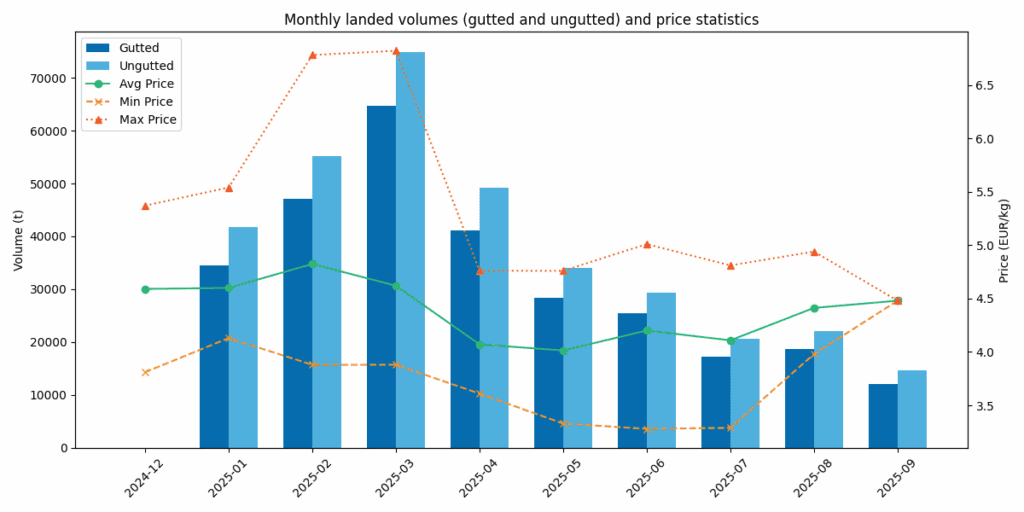
Early September cod landings reached about 26,645 tonnes across Iceland, Norway and the Faroes, while first-sales prices held firm around EUR 4.48/kg.
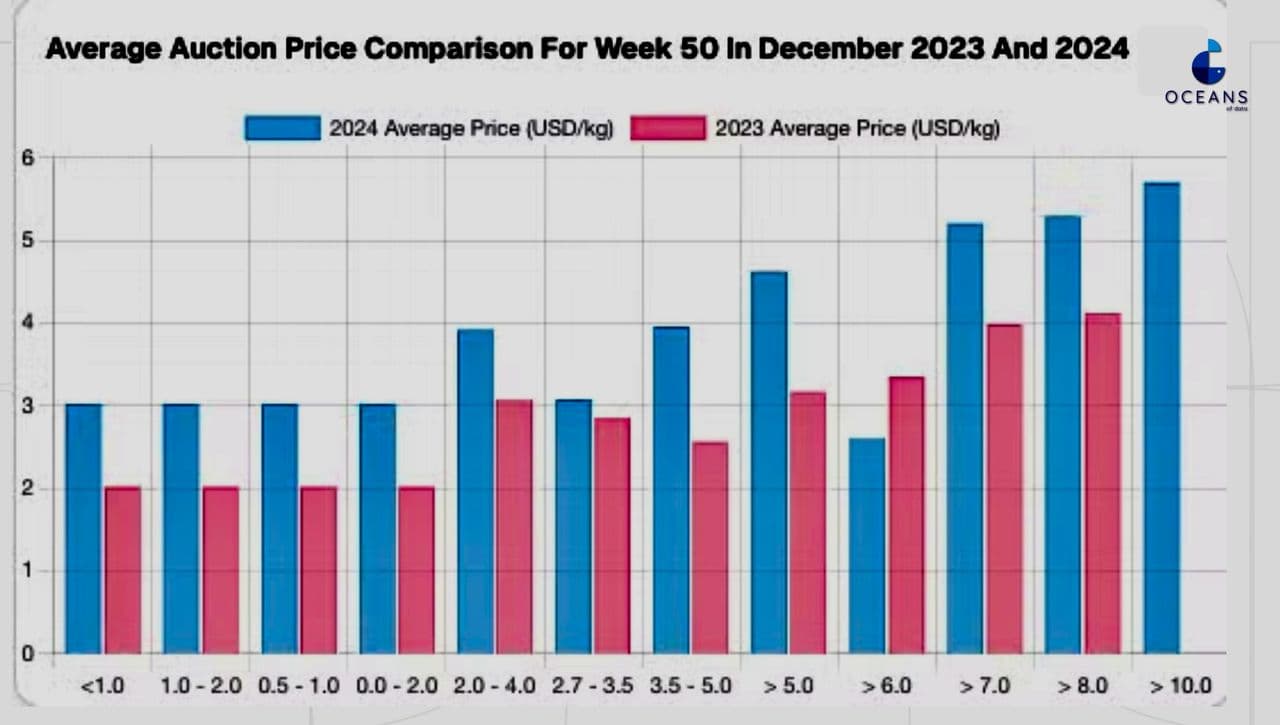
As the holiday season approaches, Icelandic auction prices for Atlantic cod have surged to record highs, driven by constrained supply and strong seasonal demand.
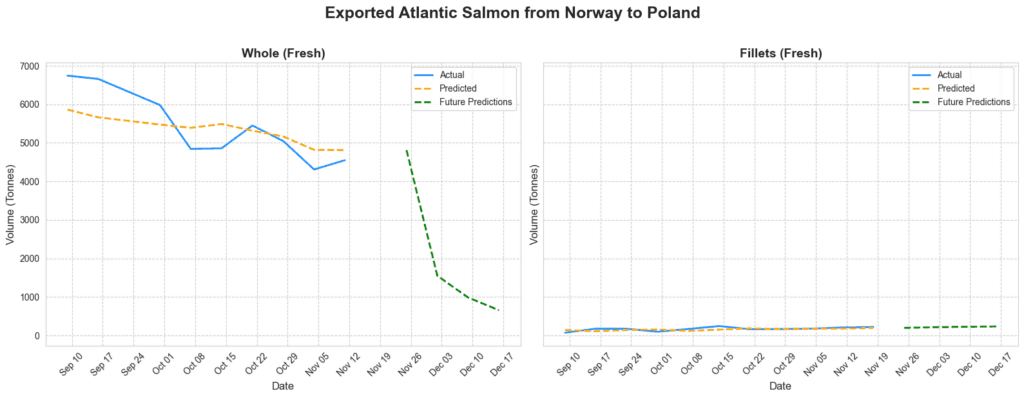
Poland is the largest importer of Norwegian salmon and a crucial processing hub. As 2024 ends, supply patterns are shifting and forecasts point to tighter availability.
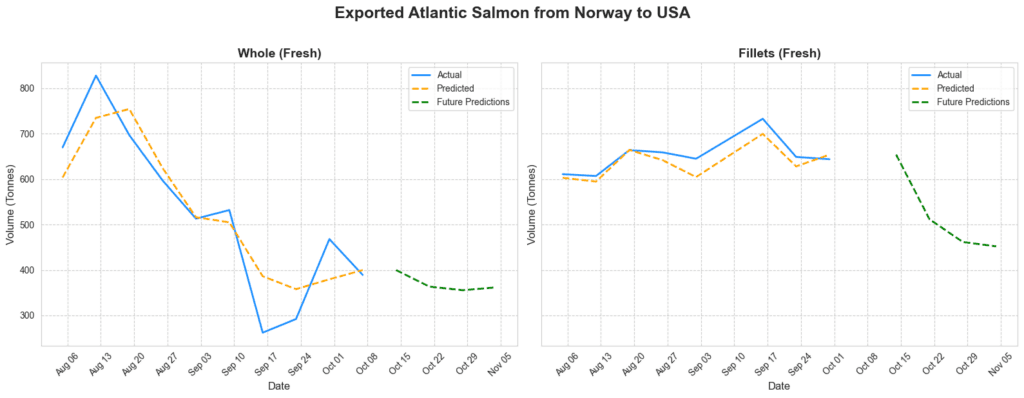
Norway-to-U.S. salmon export volumes trended down through 2024, but fresh whole salmon imports rose, pointing to a growing U.S. preference for whole fish.

Get started
Request access to the verified seafood market data our insights are built on.